The Importance Of Learning Hebrew
Why learning the Hebrew alphabet is the smartest starting point for modern, conversational, and Biblical
There’s a specific kind of longing that shows up in Jewish life.
You’re at a table. Or in a sanctuary. Or holding a siddur at a wedding or a bar/bat mitzvah. The melody is familiar. The feeling is real. And the words—beautiful, ancient, yours—still look like a closed door.
That gap isn’t a lack of identity.
It’s a lack of access.
And access is exactly where Hebrew begins.
Not with grammar charts. Not with perfection. Not with intimidation.
With letters.
Because the Hebrew alphabet isn’t just a writing system—it’s a bridge: between generations, between text and soul, between “this belongs to me” and “I can actually enter it.”
Jewish learning is facing modern headwinds we all recognize: overloaded schedules, attention fragmentation, rising costs, and fewer shared community touchpoints.
On top of that, a major North American census of supplementary Jewish schooling reported that enrollment decreased by roughly 45% from 2006 to 2020. In plain terms: fewer kids are receiving consistent Hebrew exposure in the traditional “once or twice a week” model than in previous generations.
That doesn’t mean Jewish identity is disappearing.
It means the delivery system is struggling to match real life.
Chosenology exists for this moment: to make Judaism accessible, trusted, and spiritually enriching—so learning becomes something you can actually do, not just something you wish you had time for.
People often talk about “learning Hebrew” as if it’s one thing. In reality, Hebrew shows up in layers:
Here’s the good news: they all share the same foundation—the Aleph-Bet.
So when you learn the Hebrew alphabet, you aren’t doing a cute cultural project. You’re building the base that supports everything else: decoding, pronunciation, recognition of roots, and—most importantly—confidence.
Most people don’t quit languages because they lack motivation. They quit because the brain hates ambiguity without progress.
If you can’t decode what you see, you’re forced to rely on transliteration, guessing, or memorizing sounds with no structure. That overloads working memory. Learning starts to feel like failure. And then people quietly stop.
The alphabet solves that problem.
It turns Hebrew from “mysterious symbols” into predictable building blocks. And predictable building blocks create momentum. Momentum builds commitment.
In other words: letters are not basic. They’re strategic.
Hebrew is absolutely learnable—but it does have a few “speed bumps” that can derail beginners if no one names them:
Your brain needs time to recognize shapes quickly. That’s normal.
Early on, some letters feel like cousins. You don’t need more willpower—you need smart repetition and contrast.
In everyday Hebrew writing, vowels often don’t appear. Beginners need a gentle bridge.
In prayerbooks, children’s materials, and many Biblical texts, you’ll see tiny dots and marks around letters. These vowel points help clarify pronunciation.
The principle:
Start with the consonants (letters), then add vowels in a way that feels like turning on the lights—not adding chaos.
Across the most effective language-learning approaches, the same evidence-backed principles keep showing up. We’re building Chosenology products around these ideas:
Confidence grows when your mouth learns the shapes of sounds.
When words attach to images, scenarios, and intention, they stick.
Short daily sessions reduce overwhelm and increase consistency.
Flipping a card and recalling the answer strengthens memory more than passive review.
Your brain forgets on a curve. The antidote is revisiting at increasing intervals.
You don’t become fluent by knowing facts—you become fluent by building automaticity.
Feedback helps fix pronunciation and prevents small confusion from becoming permanent frustration.
This is the core of what we mean by making Judaism accessible: not asking people for heroic discipline, but designing learning that fits real lives.
Because the alphabet is the most universal doorway.
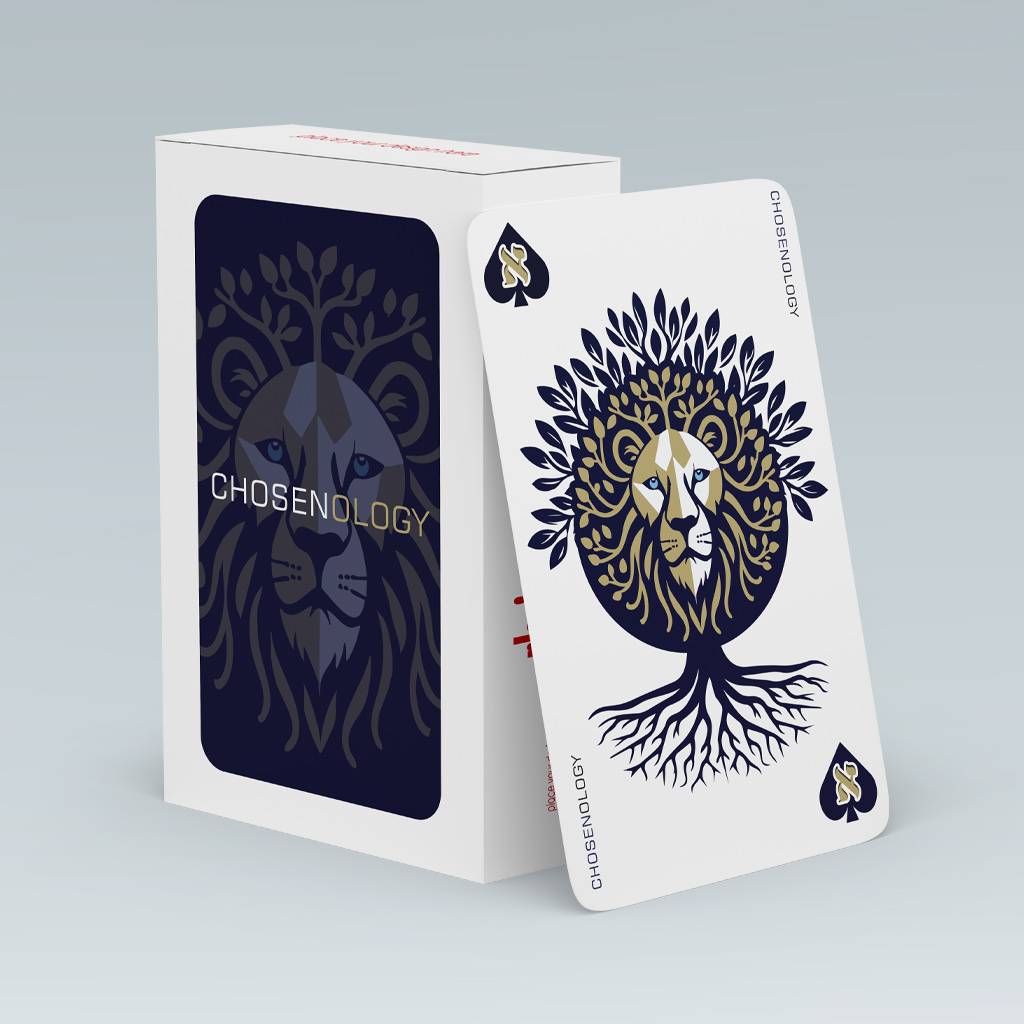
Our inaugural product line—Chosen Decks—uses a physical, deck-of-cards format to make learning tactile, portable, and repeatable. Each card delivers one bite-size piece: a letter, a sound, a visual cue, and a simple usage moment—so Hebrew learning becomes elegant instead of intimidating.
And we’re building it as physical + digital on purpose:
The result: a simple, engaging learning experience that works for children and adults.
This is empowerment.
And empowerment is protective. When more Jews can access their own language, Judaism becomes harder to dilute, distort, or disconnect from daily life.
Chosenology is inspired by a powerful idea:
Being Jewish isn’t only a privilege.
It carries a responsibility—to live with purpose, to act with compassion, to bring light into the world.
Hebrew learning isn’t just academic. It’s a way to keep the chain unbroken—with joy, not guilt.
Because what you can name, you can keep.
What you can read, you can return to.
What you can understand, you can share.
Flip 5 letters
Say each letter out loud
Cover the name and recall it
Repeat yesterday’s 5 (spaced repetition)
End by reading one short Hebrew word—even if you don’t know the meaning yet
Tiny practice. Massive identity shift.
We’re building tools that are approachable and faithful, modern and rooted—so Jewish learning feels less like pressure and more like possibility.
And because responsibility is part of the mission:
Every purchase contributes toward community programs and initiatives, and we’ll invite you to participate in deciding where that support goes.
If Hebrew has ever felt like a closed door, start with the key.
Begin with the letters. Explore the Alphabet Chosen Deck. Bring light—on purpose.
Why learning the Hebrew alphabet is the smartest starting point for modern, conversational, and Biblical

Chosenology’s Shabbat Collection offers a range of products to enhance your Shabbat experience.

There are some identities you inherit—and others you’re asked to carry. Judaism, at its best,